Let’s be honest about something first: money is no longer just numbers going in and out of our accounts. Thinking about money has become a constant background noise in our heads.
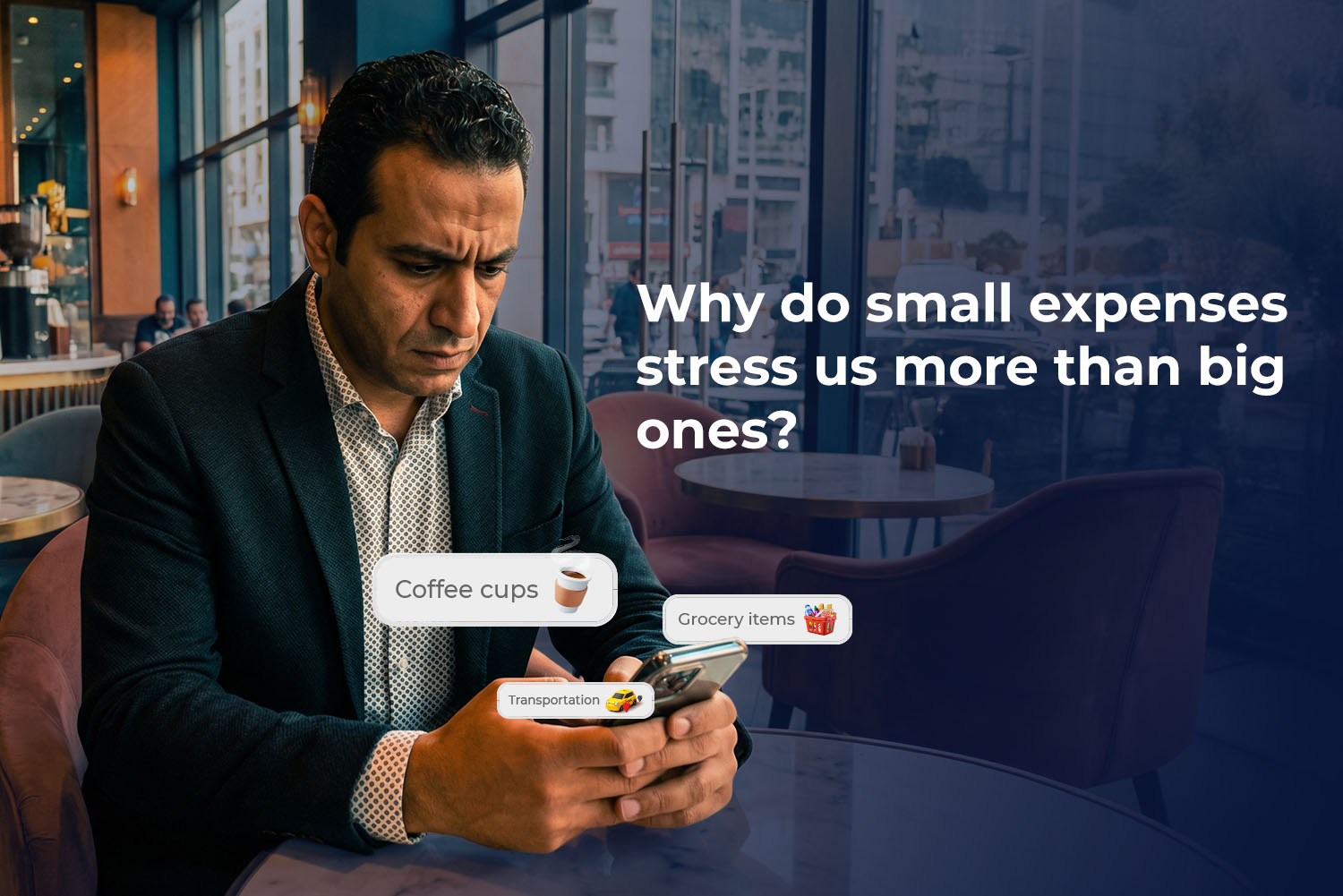
You wake up thinking about where to grab breakfast. Before ordering your morning coffee, you calculate it. After paying, you immediately open your phone to check your balance. Coffee? An Uber ride? A gym subscription? Each expense seems small on its own, but when they add up, they start to feel heavy.
What’s surprising is that the problem isn’t always overspending. Many people today track every single pound, check their balance multiple times a day, and still feel anxious. You go through the entire month on edge, afraid to spend too much, but also afraid to save and “be too hard on yourself.”
This is exactly what many people in Egypt are experiencing right now: daily expense obsession, also known as Expenses Obsession. It’s a state of excessive financial awareness where you track every transaction without ever feeling relaxed or in control.
So, the real question isn’t “Should I spend or not?” The real question is: How do we break free from this obsession and turn exhausting tracking into smart financial management?
Let’s understand what Expenses Obsession really is, why it happens, and how you can overcome it, without deprivation or constant stress. Ready? Let’s start.
What Is Expenses Obsession?
Expenses Obsession is a state of ongoing anxiety about daily spending, even when the amounts are small. It doesn’t mean you’re spending too much; it means you’re thinking too much.
Common signs include:
- Checking your bank balance repeatedly throughout the day.
- Feeling guilty after even small purchases.
- Tracking expenses more than income.
- Working all month without feeling any financial progress.
At some point, you realize the problem isn’t spending itself; it’s the lack of clarity and structure.
Financial Hyper-Vigilance: When Awareness Turns into Anxiety
What many of us are experiencing isn’t laziness, weakness, or poor money habits. It’s called Financial Hyper-Vigilance. This shows up as:
- Extreme awareness of every pound spent.
- Constant inner questions like “Did I really need this?”.
- Ongoing fear of the future, even when things seem stable.
- A strong need to control every small financial detail.
The problem is that awareness, instead of being a safety tool, turns into a source of stress. Instead of helping us plan, it becomes a way to temporarily calm ourselves, without ever feeling truly calm.
The result? Mental exhaustion, distraction, and a constant feeling that money is never enough, even when the numbers say otherwise.
Why Are We So Obsessed with Daily Expenses?
There are real reasons behind this growing money anxiety, especially in Egypt:
1. Rising Costs & Financial Instability
Prices change fast, while income stays the same or grows slowly. This makes even small expenses feel like a threat to your financial balance, keeping your mind constantly alert.
2. Easy Digital Payments
Cards, mobile wallets, QR payments, and prepaid cards make money leave without us physically feeling it. This disconnect leads to regret after spending and excessive self-blame.
3. Lack of a Clear System
Spending without a plan equals constant worry. You’re always trying to remember where your money went instead of knowing where it’s going.